

Have you ever wondered why top chefs around the world consider bone marrow one of the most luxurious, flavor-packed ingredients on the planet? This humble ingredient, once overlooked by home cooks, has surged in popularity — and for good reason.
If you’ve been searching for the best bone marrow food recipes, you’ve come to the right place. Bone marrow delivers an incredibly rich, buttery flavor that transforms simple dishes into restaurant-quality meals. It’s also loaded with essential nutrients that support joint health, immunity, and overall wellness.
Whether you’re a seasoned cook or a curious beginner, this guide walks you through everything. From ingredients and step-by-step instructions to nutritional data and storage tips, we’ve got you covered. Let’s dive into the world of bone marrow cooking.
Ingredients List
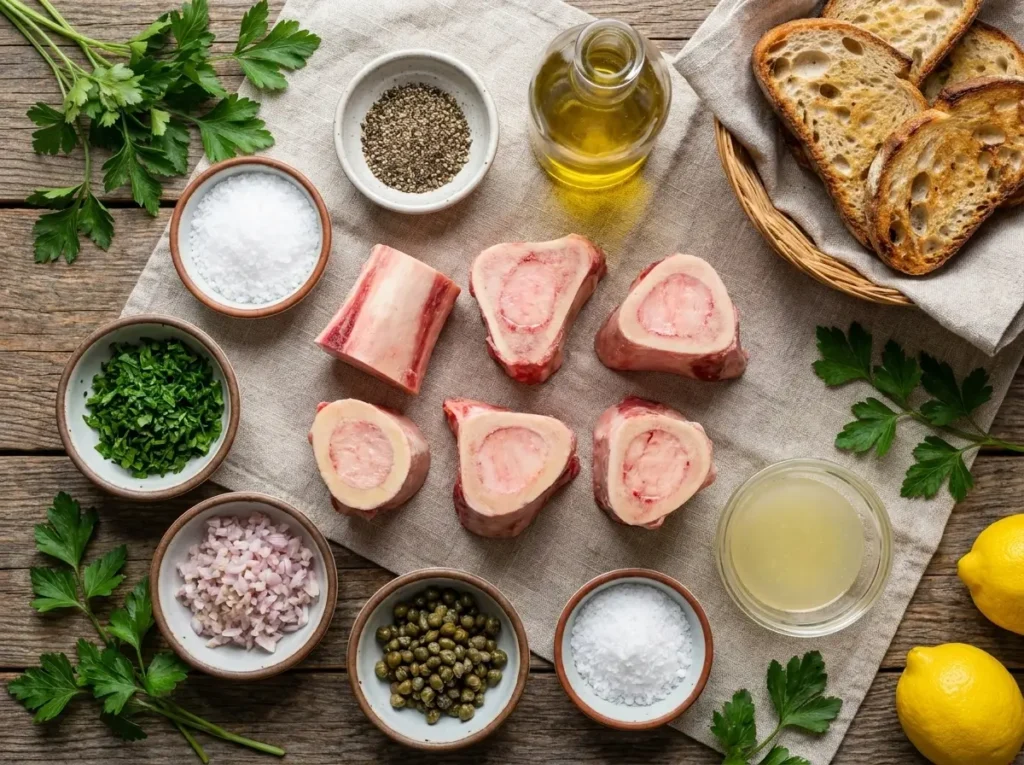
This recipe focuses on the classic roasted bone marrow preparation — the foundation of most bone marrow food recipes. It’s simple, elegant, and absolutely delicious. Here’s what you’ll need:
- 6 center-cut beef marrow bones (about 3 inches long each, canoe-cut or cross-cut)
- 1 tablespoon coarse sea salt (or Himalayan pink salt for a mineral boost)
- 1 teaspoon freshly cracked black pepper
- 2 tablespoons fresh parsley, finely chopped
- 1 small shallot, minced (substitute with red onion if unavailable)
- 1 tablespoon capers, drained and roughly chopped
- 1 tablespoon fresh lemon juice
- 1 teaspoon flaky finishing salt (such as Maldon)
- Crusty sourdough bread or baguette slices, toasted
- Extra virgin olive oil for drizzling (optional)
Substitution Tips: If you can’t find beef marrow bones, veal marrow bones work beautifully. For a dairy-free, paleo-friendly approach, skip the bread and serve with roasted vegetables instead. Gluten-free crackers also make an excellent alternative.
Ask your local butcher to cut the bones for you. Most butchers are happy to do this at no extra charge. Canoe-cut bones (split lengthwise) are ideal for presentation, while cross-cut bones are easier to scoop.
Timing
Preparation Time: 15 minutes (plus 12–24 hours for optional soaking)
Cooking Time: 20–25 minutes
Total Time: Approximately 35–40 minutes (excluding soaking)
Compared to many gourmet dishes that require hours of preparation, roasted bone marrow is remarkably quick. At under 40 minutes of active time, it’s roughly 60% faster than the average elaborate appetizer recipe. The optional overnight soak in salted water helps draw out blood and impurities, resulting in a cleaner, more refined flavor.
Step-by-Step Instructions
Step 1: Soak the Bones (Optional but Recommended)
Place the marrow bones in a large bowl of ice-cold water. Add one tablespoon of salt per cup of water. Refrigerate for 12 to 24 hours, changing the water every few hours if possible.
This soaking process removes blood and impurities from the marrow. It produces a cleaner, more ivory-colored marrow with a milder, more refined taste. While optional, professional chefs almost always include this step.
Step 2: Preheat Your Oven
Preheat your oven to 450°F (230°C). Position the rack in the center of the oven. A high temperature is essential for achieving that perfect golden, slightly caramelized top without completely melting the marrow.
Pro Tip: Line your baking sheet with aluminum foil or parchment paper. Melted marrow fat can be messy, and this makes cleanup significantly easier.
Step 3: Prepare the Bones for Roasting
Remove the bones from the soaking water and pat them thoroughly dry with paper towels. Place them cut-side up on the prepared baking sheet. Season generously with coarse sea salt and freshly cracked black pepper.
If using cross-cut bones, stand them upright. You can crumple small balls of aluminum foil around the bases to keep them stable and prevent tipping during roasting.
Step 4: Roast the Bone Marrow
Place the baking sheet in the preheated oven. Roast for 20 to 25 minutes. The marrow should be soft and jiggly, slightly pulling away from the bone, with a light golden color on top.
Critical Warning: Do not overcook. If the marrow completely liquefies, it will melt into the pan and you’ll lose that precious, buttery goodness. Start checking at the 18-minute mark. The marrow is ready when it’s soft throughout but still holds its shape.
Step 5: Prepare the Parsley Salad Topping
While the bones roast, prepare a bright, herbaceous topping. In a small bowl, combine the chopped parsley, minced shallot, capers, and lemon juice. Toss gently and season with a pinch of salt.
This parsley salad is not just a garnish — it’s essential. The acidity and freshness cut through the richness of the marrow, creating a perfectly balanced bite. It’s a technique used in the most celebrated bone marrow food recipes worldwide.
Step 6: Toast the Bread
Slice your sourdough or baguette into half-inch-thick pieces. Toast them until golden and crispy, either in the oven during the last few minutes of roasting or in a toaster. The bread must be sturdy enough to support the weight of the rich, spreadable marrow.
Step 7: Serve Immediately
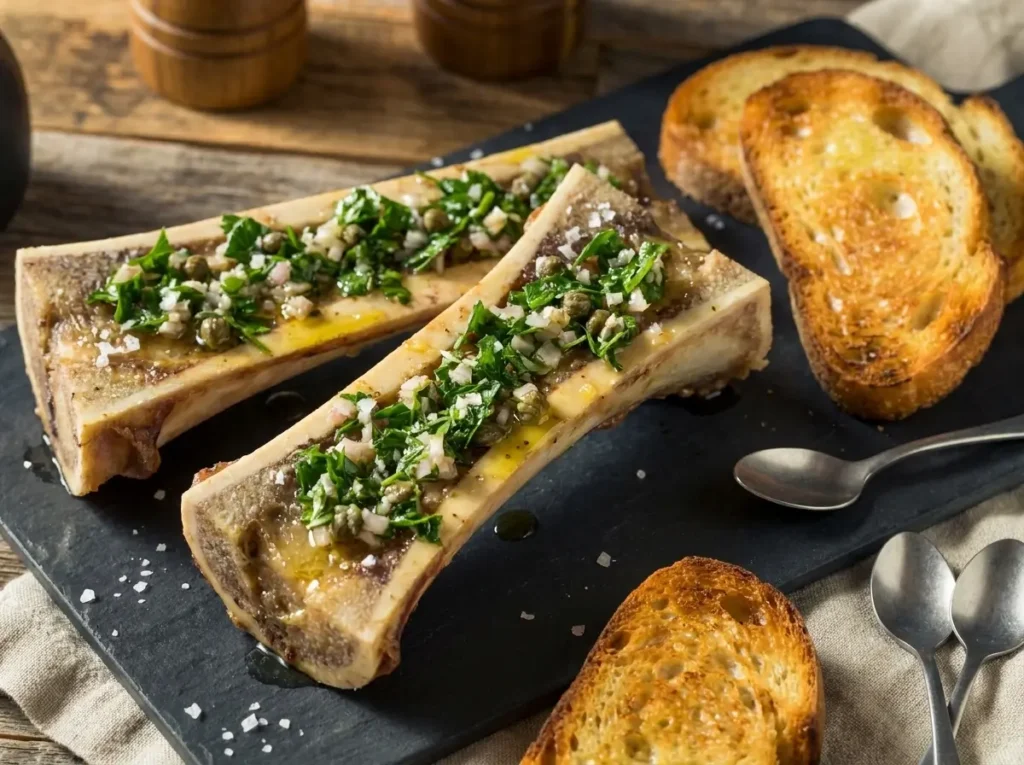
Remove the roasted bones from the oven. Sprinkle with flaky finishing salt and top with the parsley salad. Serve immediately alongside the toasted bread. Encourage guests to scoop the marrow directly from the bone and spread it on the toast.
A small drizzle of extra virgin olive oil over the top adds a beautiful sheen and an extra layer of flavor. Serve with small spoons or butter knives for easy scooping.
Nutritional Information
Bone marrow is a nutritional powerhouse that has been consumed by humans for thousands of years. One serving of roasted bone marrow (approximately 2 tablespoons or 28 grams) provides impressive health benefits.
Approximate Nutritional Breakdown Per Serving:
- Calories: 110–120 kcal
- Total Fat: 12g (mostly monounsaturated and saturated fats)
- Protein: 1–2g
- Collagen: Significant amounts (supports skin, hair, and joint health)
- Iron: 4% of daily recommended value
- Vitamin B12: Excellent source
- Conjugated Linoleic Acid (CLA): Present in grass-fed varieties
Research published in nutritional science journals highlights bone marrow as a rich source of adiponectin. This hormone helps regulate insulin sensitivity and has been linked to reduced inflammation. Grass-fed bone marrow contains higher concentrations of omega-3 fatty acids and CLA compared to grain-fed alternatives.
Bone marrow also contains glycine and proline — amino acids crucial for collagen production. These compounds support gut lining integrity, making bone marrow particularly beneficial for those following gut-healing protocols.
Healthier Alternatives for the Recipe
While roasted bone marrow is naturally nutrient-dense, there are several modifications you can make to align the dish with specific dietary goals and preferences.
Reduce Overall Calories: Instead of spreading marrow on bread, serve it over a bed of arugula or mixed greens. The peppery greens complement the richness beautifully while cutting calories significantly.
Boost Nutrient Density: Add a gremolata made with lemon zest, garlic, and fresh herbs instead of the standard parsley salad. Garlic provides allicin, a compound known for its immune-boosting and anti-inflammatory properties.
Keto and Paleo Friendly: Skip the bread entirely. Serve the marrow with seed crackers, cucumber rounds, or roasted root vegetables. The marrow itself is naturally low-carb and fits perfectly within ketogenic macros.
Source Grass-Fed Bones: Whenever possible, choose bones from grass-fed, pasture-raised cattle. These contain a superior fatty acid profile with higher omega-3 content and more fat-soluble vitamins like A, D, and K2.
Serving Suggestions
The versatility of bone marrow food recipes extends far beyond simple toast. Here are creative ways to elevate your presentation and impress your guests.
As a Luxurious Appetizer: Serve roasted marrow bones on a wooden board with toasted bread, the parsley salad, flaky salt, and cornichons. Add a small ramekin of Dijon mustard for an authentic French bistro experience.
Steak Night Enhancement: Scoop roasted marrow over a freshly grilled ribeye or filet mignon. The marrow melts into the hot steak, creating an unbelievably rich, buttery sauce. This is a steakhouse secret worth knowing.
Pasta Enrichment: Stir roasted bone marrow into freshly cooked risotto or pasta. It adds depth and body that rivals any cream-based sauce. Pair with mushroom risotto for an earthy, umami-packed dish.
Brunch Feature: Spread roasted marrow on sourdough toast and top with a poached egg, a sprinkle of chili flakes, and microgreens. It’s an indulgent twist on avocado toast that will become your new weekend favorite.
Wine Pairing: Bone marrow pairs exceptionally well with full-bodied red wines. A Barolo, Cabernet Sauvignon, or aged Bordeaux complements the rich, fatty flavors perfectly.
Common Mistakes to Avoid
Even experienced cooks can stumble with bone marrow. Here are the most common pitfalls and how to sidestep them confidently.
- Skipping the Soak: Failing to soak bones results in marrow with a slightly bloody, metallic taste. The overnight soak is the single most impactful step for flavor purity.
- Overcooking: This is the number one mistake. Overcooked marrow melts completely out of the bone, leaving you with an empty shell. Watch carefully after 18 minutes and remove when jiggly but intact.
- Using Low Oven Temperature: A low temperature causes the marrow to slowly render out rather than roast. Stick to 450°F for the ideal balance of caramelization and creaminess.
- Neglecting the Acid Component: Serving marrow without an acidic counterpoint (lemon, vinegar, or pickled garnish) makes the dish feel overwhelmingly heavy. The parsley salad is not optional — it’s essential.
- Choosing the Wrong Bones: Not all bones contain quality marrow. Ask specifically for femur or shin bones from your butcher. Knuckle bones and joint bones are better suited for stock, not roasting.
- Serving on Cold Plates: Bone marrow solidifies quickly at room temperature. Warm your serving plates in the oven beforehand to keep the marrow soft and spreadable longer.
Storing Tips for the Recipe
Raw Bones: Uncooked marrow bones can be stored in the refrigerator for up to 3 days. For longer storage, wrap them tightly in plastic wrap and freeze for up to 6 months. Thaw overnight in the refrigerator before cooking.
Cooked Bone Marrow: Leftover roasted marrow can be scooped from the bones and stored in an airtight container in the refrigerator for up to 3 days. Reheat gently in a 350°F oven for 5 to 8 minutes.
Rendered Marrow Fat: Don’t discard the melted fat from the roasting pan. Strain it through a fine-mesh sieve and store in a glass jar in the refrigerator for up to two weeks. Use it as a cooking fat for roasting vegetables, searing steaks, or making scrambled eggs. It adds extraordinary depth of flavor.
Meal Prep Tip: Soak and prepare your bones in advance. Pre-soaked bones can be drained, dried, and stored in the refrigerator for up to 24 hours before roasting. This makes weeknight preparation effortless.
Conclusion
Roasted bone marrow is one of those rare dishes that delivers extraordinary flavor with minimal effort. With just a handful of ingredients and under 40 minutes of active cooking time, you can create a dish that rivals the finest restaurant appetizers.
The key takeaways from this guide are simple: soak your bones for cleaner flavor, roast at high heat, never overcook, and always serve with a bright acidic garnish. These fundamentals apply to virtually all bone marrow food recipes you’ll encounter.
Beyond its incredible taste, bone marrow offers remarkable nutritional benefits — from collagen and healthy fats to essential vitamins and minerals. It’s a true superfood that has nourished humans for millennia.


[…] ingredient into “God’s butter.” This guide will walk you through the ultimate Bone Marrow Recipe, proving that gourmet dining is accessible to […]